
Hoy día, es posible observar muchas diferentes clases de familias. Si bien muchos niños viven en familias con sus dos padres, las familias 'mixtas' se han vuelto mucho más comunes. Los niños pueden tener relaciones familiares con hermanastros, padres adoptivos, hermanos adoptivos, dos mamás, medio hermanos, abuelos que hacen las veces de padres, y otros.

No Todas las Familias Son Iguales
Topics: Family & Community Engagement, En español, Parenting
Continue ReadingFamilies Are Not All Alike
Nowadays, it's possible to observe many different types of families. While many children live with two parents, other family types have become much more common. Children can have family relationships with step-siblings, adoptive parents, adoptive siblings, two moms or two dads, a single parent, half-siblings, grandparents raising grandchildren, and others.
Topics: Parenting
Continue ReadingLos Niños y Los Medicamentos Fuera Del Hogar
El uso de medicamentos para tratar a los niños pequeños va en aumento. Este aumento puede atribuirse a diversas causas: el aumento en los tratamientos para el asma, una mayor dependencia de los médicos para controlar el comportamiento, y el aumento en la incidencia de ciertas enfermedades. Aunque la mayoría de los medicamentos que se administran a los niños son para resfriados, infecciones, y dolor o fiebre, a muchos niños se les ha diagnosticado condiciones crónicas, tales como el Síndrome de Deficiencia de Atención/Hiperactividad (Attention Deficit/Hyperactivity Disorder, o ADHD), diabetes, depresión o asma, donde los medicamentos terapéuticos se han constituido en una rutina diaria.
Topics: En español, Parenting, Health & Safety
Continue ReadingChildren and Medication Outside the Home
The use of medication for young children is on the rise. This increase is due to several reasons: the increase in asthma treatments, a greater reliance on medication for behavior control, and the increased incidence of some diseases. Most medications given to children are for colds, infections and pain or fever, but many children are diagnosed with chronic conditions such as Attention Deficit/Hyperactivity Disorder (ADHD), diabetes, depression or asthma where therapeutic drugs have become a way of life.
Topics: Parenting, Health & Safety
Continue ReadingCCW Summit Spotlight: Owning Your Expertise with the Media
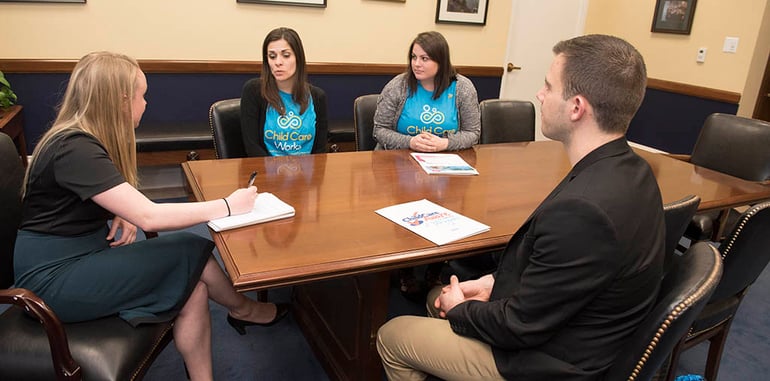
Living in the 24-hour news cycle can be exhausting and overwhelming for some. Still, many of us have important stories to tell and are experts in the field of child care and early education. At this year’s Child Care Works (CCW) Summit, we will have a media workshop where attendees will learn to embrace, rather than fear, the media. 2019 is a critical year for child care, so there’s no better time than now to make child care a central topic of conversation. One of the most valuable ways to do that is through earned media where we can use our stories and our expertise to center the narrative that all children and families deserve access to a high-quality child care system.
Topics: Professional Development
Continue ReadingThe Wins that Will Mobilize & Unite Us as We Move Forward
As we prepare for strategic planning for FY20-22, I have been reflecting on the great work we have done toward meeting our mission to advance a child care system that effectively serves all children and families. Every step we have taken gets us closer to fulfilling our vision: That every family in the United States has access to high-quality, affordable child care.Child Care Aware® of America (CCAoA) had a number of recent successes that will continue to propel us toward that future.
Topics: Systems Building
Continue Reading